
Overseas orders for residential storage continue to grow, but their complex operating conditions, unattended operations, and strict certification requirements pose a severe challenge to product stability. This article compiles a set of directly applicable battery cell and PACK specialized testing solutions, covering R&D, mass production, certification self-testing, and adapting to domestic and international standards, making it suitable for industry professionals to keep for reference.
Extreme temperature differences in environment: Outdoor exposure to high temperatures, low winter temperatures, and high humidity during the rainy season, all requiring extremely high temperature cycle stability for batteries;
Long-term unattended: requirements for self-discharge, static power consumption, and long-term idle reliability far exceed those of power batteries;
Highly random operating conditions: photovoltaic intermittent charging and large load fluctuations, frequent start-stop and shallow charging and discharging, which easily cause cell consistency degradation;
Strict compliance requirements: exports to Europe, America, and Australia must pass the full set of UL and IEC safety tests; domestically, they must meet the GB44240 energy storage mandatory standards, and missing tests can prevent customs clearance.
Battery cells are the foundation of residential storage quality. Mass production sorting only tests capacity and internal resistance are far from sufficient; comprehensive testing is divided into four main areas: performance, environment, safety, and cyclic aging.
Core control ensures consistency of basic battery cell parameters, eliminating issues such as excessive voltage difference and uneven attenuation after grouping from the source.
✅ Static parameters: Open-circuit voltage OCV, static self-discharge, precise testing of 1kHz AC internal resistance
✅ Dynamic parameters: standard capacity calibration, charging and discharging tests at different rates, energy efficiency testing
✅ Cutoff characteristics: overcharge cutoff, low-voltage cutoff, rebound voltage testing
Core Objective: To select high-quality cells with low parameter dispersion and no self-discharge anomalies, ensuring subsequent group stability.
Residential storage must be tested comprehensively under year-round outdoor conditions, with temperature adaptability being a high-risk risk factor.
✅ High-temperature charge-discharge and high-temperature storage aging (simulating summer sunlight)
✅ Low-temperature start and low-temperature capacity testing (solving winter power outages and startup failures)
✅ Temperature cycling alternating test: Repeatedly temperature cycling at -20°C~60°C to verify the reliability of cell sealing and tab welding
Benchmarked against IEC62619, UL1973, and GB44240 standards, serving as a strict threshold for export and domestic compliance.
✅ Overcharge, over-discharge, and overcurrent protection tests
✅ External short circuit, extrusion, and impact safety tests
✅ Thermal abuse testing verifies the cell's ability to withstand high temperatures and prevent fire and explosion
Residential storage focuses on long lifespan, low degradation, and stable circulation under shallow charging and discharge conditions, directly determining the product's market reputation.
✅ Conventional rate long cycle life test
✅ Simulates intermittent charge-discharge cycle conditions for photovoltaics
✅ Re-measure capacity degradation and internal resistance changes after cycling
Qualified cells do not necessarily mean battery assembly cells; 90% of failures in residential storage systems stem from four major issues: group consistency, thermal management, BMS matching, and operating condition adaptation.
✅ Full charging and full discharge single-cell differential monitoring (industry standard: whole cluster voltage range ≤350mV)
✅ Package capacity and actual usable energy are calibrated
✅ Multi-rate load testing, load fluctuation adaptability testing
✅ Insulation, voltage resistance, and leakage current testing (household equipment safety bottom line)
Residential storage machines most fear local high temperatures and excessive temperature differences, which can easily cause premature cell aging at single points.
✅ Temperature distribution detection during continuous full-power operation
✅ Air-cooled/passive cooling efficiency verification, maximum temperature difference control for the entire machine
✅ Testing the stability of the entire machine under high temperature and high humidity conditions
Unattended home storage, BMS fault tolerance directly determines the overall safety of the machine.
✅ Verification of overvoltage, undervoltage, overcurrent, overtemperature, and low-temperature protection functions
✅ Simulation tests for communication anomalies and disconnection faults
✅ Stability testing of repeated start-stop and intermittent charge-discharge protection
✅ Long-term self-discharge test of the entire device after long-term standing-time operation (suitable for long-term home use in airport scenarios)
✅ The entire machine cycles aging, simulating 3-5 years of household wear and degradation
✅ Vibration and drop machinery testing (adapted for logistics and home installation scenarios)
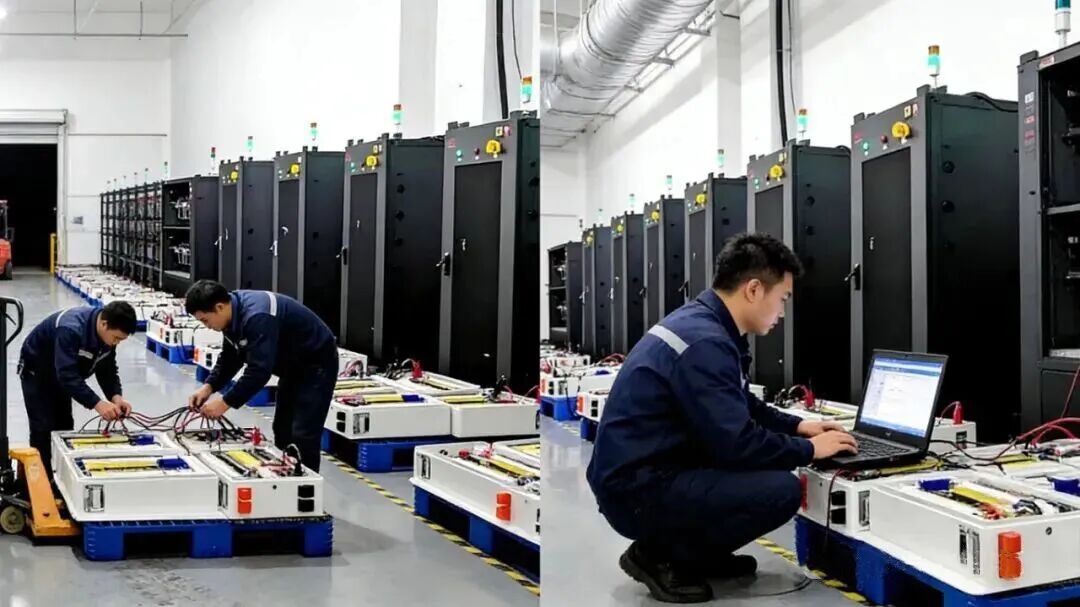
It can complete new product parameter verification, working condition adaptation, and ultimate performance assessment, proactively avoiding certification defects.
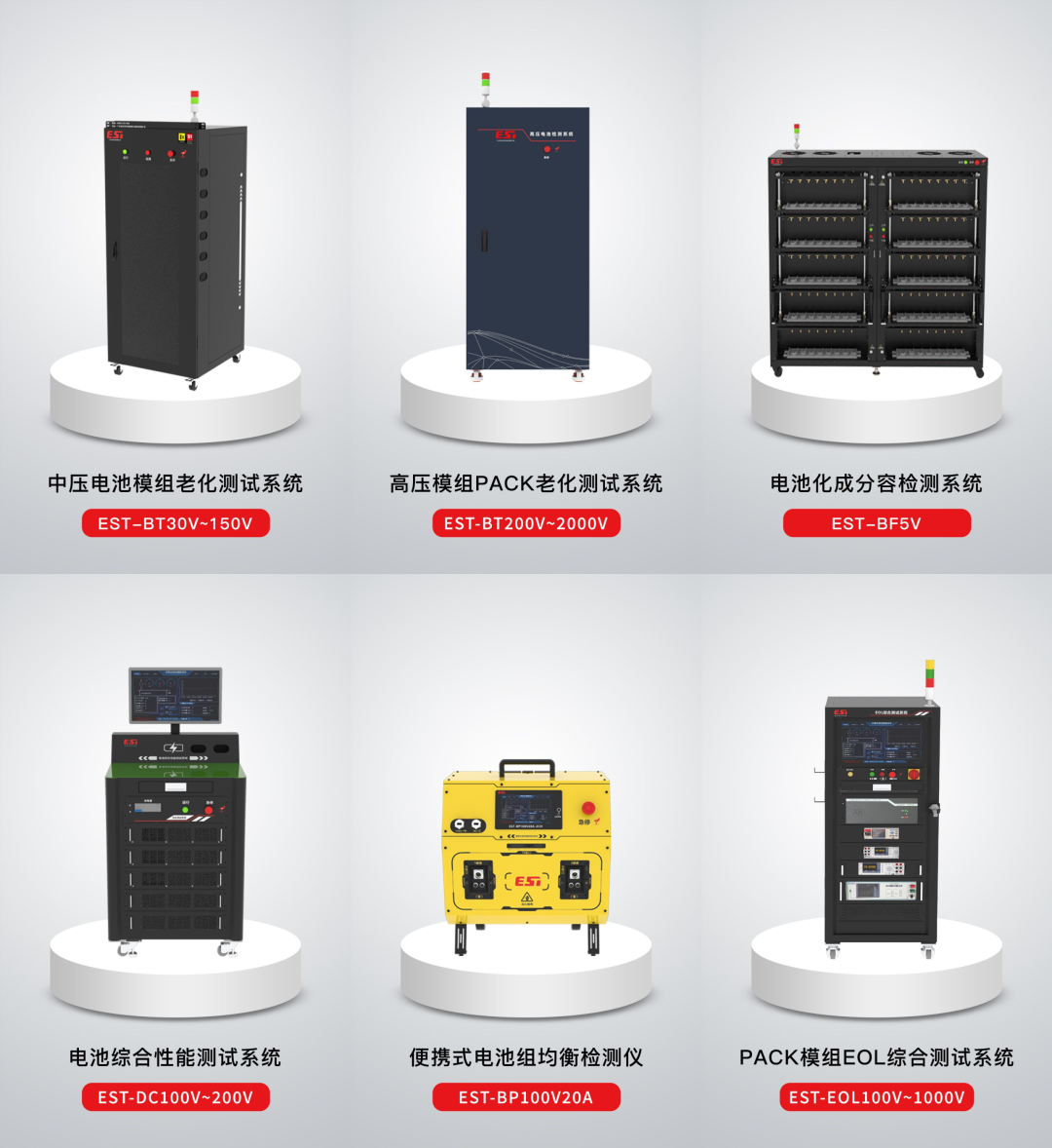
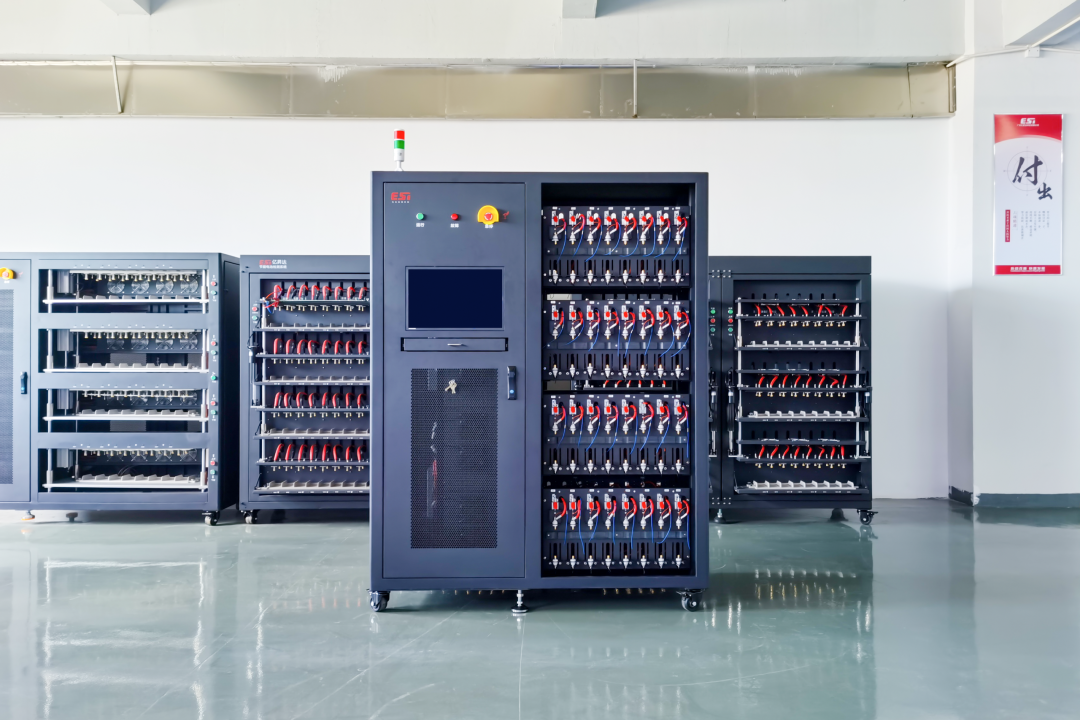
Multi-channel cell and volumetric testing system + PACK battery pack EOL testing system + module PACK comprehensive testing system + Module PACK aging testing system
Focusing on rapid sorting, consistency verification, and full product inspection, we strictly control batch quality issues and improve shipment pass rates.
Guangdong Yishengda | One-stop battery testing solution provider, building a closed-loop system covering five major equipment systems: cell capacity distribution, module aging, comprehensive performance R&D and testing, final EOL inspection after PACK shipment, and balanced maintenance afterward, enabling precise monitoring of battery lifecycle performance. Relying on independent hardware and software R&D capabilities and multiple equipment patents, the company's full range of equipment supports flexible non-standard customization for voltage, current, and channels; Equipped with a high-efficiency energy feedback solution, it effectively reduces enterprise production energy costs, and is equipped with multiple safety protections for the entire machine, strictly complying with lithium battery production safety standards. Based on the characteristics of residential storage products, the Yishengda testing series equipment can be perfectly adapted to specialized conditions such as intermittent charging and discharging of photovoltaics, high/low temperature coupling, and shallow charging and discharging, covering new product R&D assessment, UL/IEC certification self-testing, and full mass production inspection scenarios.